How can our cars be maintained ?
These include automatic-braking sensors, motorway lane sensors, mapping technology
These include automatic-braking sensors, motorway lane sensors, mapping technology
that monitors blind spots, cameras in the back and front of a car, adaptive cruise control and self-parking capabilities.
Most modern cars feature autonomous systems like Autonomous Emergency Braking (AEB). AEB systems use radar, cameras and lidar technology to assess the road ahead and work out potential collisions.
Featured High-Tech Car Reviews:
cars manufacturers with the most relevant techs:
- 2017 Chevrolet Bolt EV Review. ...
- 2018 Toyota Camry Hybrid XLE Review. ...
- 2017 Chevy Volt Premier Review. ...
- 2017 Chrysler Pacifica Hybrid Review. ...
- 2018 BMW 530e xDrive iPerformance Review. ...
- 2018 Honda Clarity Plug-In Hybrid Review. ...
- 2017 Hyundai Ioniq Review. ...
- 2017 Kia Optima Plug-in Hybrid Review.
Which technological invention was the most significant one for making the car part of culture?
The steam engine was, undoubtedly, the most important innovation in automobile engineering. Although originally developed to pump water out of mines, improvements over time would drastically shrink the size of the technology.
10 car safety features
Drivers are protected by more car safety features than ever, including airbags, shatter resistant glass, anti-lock brakes, stability control, and more.
Constantly evolving vehicles have created the need for more car safety features than vehicles of the past. As cars become faster and more efficient, they must also become safer.
- Shatter resistant glass. Shatter resistant glass provides a windshield that breaks into numerous, harmless pieces in the event of an accident. The windshields in earlier motor vehicles where dangerous. If the windshield was to brake, the driver would be covered in shards of glass. Shatterproof glass is laminated in such a way as to prevent injuries
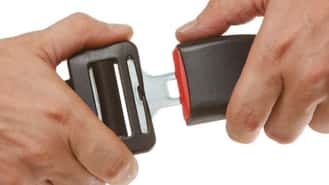
- Seatbelts. This safety feature, invented in 1849, was not standard equipment until 1966, when the National Traffic and Motor Vehicle Act and the Highway Safety Act gave control to the federal government. The federal government formed the National Highway Traffic Safety Administration or NHTSA. The NHTSA made it mandatory for all vehicle manufacturers to make seatbelts standard in all motor vehicles. Since the 1960's several improvements to seatbelts have been made
- Airbags. In 1968, Allen Breed invented the first electronic sensor to set off air bags in the case of an accident. In 1988, Chrysler made airbags standard equipment in all their vehicle models. Chrysler was ahead of the game, since it was not until 1998 that airbags became mandatory in all motor vehicles
- Anti-lock braking systems. The earliest braking systems in automobiles only applied braking pressure to the rear wheels. During emergency breaking situations the rear wheels would lock up, causing the vehicle to slide and swerve to a stop. It was not until the 1920's that four wheel brakes where introduced. Four wheel brakes helped prevent swerving in an emergency braking situation. The introduction of ABS solved the skidding problem and also allowed the driver to maintain control of steering, while braking on slick surfaces
- Stability control. Stability control allows drivers to avoid dangerous rollover accidents, by the computer helping to compensate for driver error. If you turned too hard in a vehicle without stability control you may have a rollover accident. If you did the same maneuver in a vehicle with stability control the computer compensates for the amount of over steer by sending power to different wheels to avoid an accident
- Lights. Three types of lights are essential for any vehicle: break lights, turn signals and headlights. Make sure that you use all these. You should also check the bulbs regularly to ensure that they're in perfectly working condition. Have a bulb replaced as soon as it fails. If you're frequently traveling on long routes at nighttime, you should consider having powerful bulbs or HIDs installed for your headlights
- Mirrors. Proper positioning of side and rear view mirrors is very important. Proper alignment of mirrors ensures high visibility and eliminates the blind spots
- Bumpers. Perhaps the most primitive of safety features, bumpers are built to withstanding minor collisions. They can prevent damage to the main body and engine of the car
- Four wheel steering. This option offers precise maneuvering ability while driving at a high speed. It is especially useful if you're driving on hilly areas
- Pre-collision technology. Many modern day cars have sensors that provide impact protection when an impending collision is detected. Seat belts get tighter, airbags align and brakes become preloaded to reduce shock.
Types of airbags: Vehicle safety device that inflates during an accident. It provides driver and passenger protection from debris and lessens the severity of impact. Today's models feature no fewer than six airbags which include the following:
- Driver Side Airbag
- Front Passenger Airbag
- Driver Side Head Airbag
- Front Passenger Head Airbag
- Driver/Front Passenger Side Airbag
Four-Wheel Antilock Brake System (ALB): Electronic braking system which allows the driver to maintain control of the vehicle in an emergency braking situation. The system allows the driver to apply full force to the brake pedal while avoiding the task of pumping the brake pedal to modulate the brakes.
Brake Assist: Electronic system that automatically increases braking pressure to the vehicle's brakes in an emergency situation. The vehicle's computer automatically interprets the vehicle's speed in relation to the force applied on the brake pedal. This system kicks in before the ALB system mentioned above. Combined, they both prevent the wheels and tires from dangerously locking up.
Electronic Stability Control (ESC): System that detects a loss of traction and/or steering control and automatically helps the driver maintain control should traction loss occur. The system effectively "steers" the vehicle by applying brake pressure to each wheel/tire independently.
Traction Control: Secondary function of ESC, traction control is designed to prevent a loss of traction on only the driven wheels. Traction control is activated when the engine's torque exceeds the traction available on the road's surface.
Child Safety Locks: Locks which are built in to the rear doors of all vehicles. They are designed to help prevent children from opening the rear doors, especially during transit.
Front Disc/Rear Drum Brakes: It might seem obvious, but front disc brakes and rear drum brakes make a solid combination in terms of stopping performance. Although some shoppers insist on four-wheel discs brakes, today's rear drum brakes work fine. Moreover, the front brakes of every car are responsible for around 80 - 90% of a vehicle's stopping.
Vehicles Under $15,000 that is equivalent to .NGN 5,422,500. Which Have These Safety Features:
- Get link
- X
- Other Apps
- Get link
- X
- Other Apps
yoop
ReplyDelete